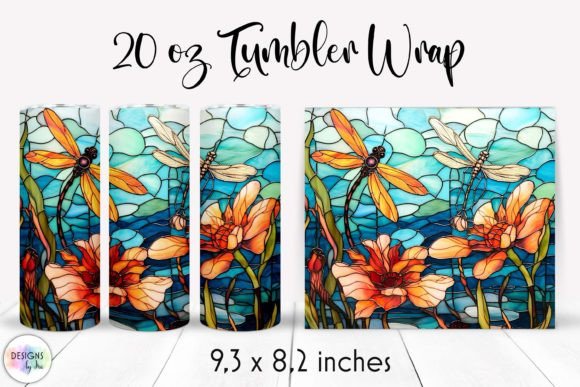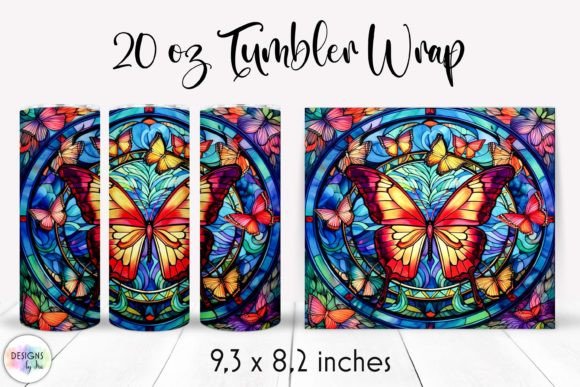
Butterfly Stained Glass Tumbler Design Review
Last Tuesday I stood in my studio holding a soft ivory sweatshirt, trying to decide which design would feel right for a boutique client's spring collection. She wanted something that felt delicate but structured, colorful but not chaotic. I scrolled through my digital library and stopped on the Butterfly Stained Glass Tumbler Design. The thumbnail alone gave me pause. There was a clarity in the composition that made me think this might actually work across more than just a tumbler.
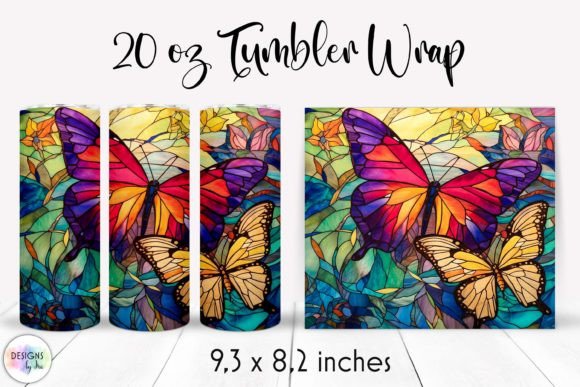
Before I go further, let me be clear about what this product actually is. The Butterfly Stained Glass Tumbler Design comes as part of a Dragonflies and Butterflies Stained Glass Tumbler Wrap Bundle. You receive nine PNG files sized for 20 oz straight tumbler wraps at 9.3 by 8.2 inches, all at 300 dpi. This is a graphics product, a sublimation-ready Tumbler Wraps asset. It is not sold as a digitized embroidery file. That distinction matters enormously for anyone in my line of work, because how you use a Graphics asset versus a ready-to-stitch file changes your entire workflow.
Still, I have learned over fifteen years of running a small embroidery business that a strong visual design can be the starting point for something beautiful on fabric, if you know what you are looking at. So I sat down and really studied this butterfly.
First Look at the Stained Glass Butterfly Composition
The stained glass approach gives the butterfly a segmented, geometric personality. Instead of soft, blended wings, you get clearly defined sections separated by bold lines that mimic leading. The fragments inside each wing section hold gradients and color shifts that feel luminous on screen. The mood lands somewhere between artisan craft and modern whimsy. It does not read as childish or overly sweet. There is a grown-up elegance in the structure that would appeal to someone buying a handmade gift or a boutique tote bag.
What struck me immediately was how the segment lines could translate into stitch boundaries. If you have ever digitized artwork for machine embroidery design work, you know that clean separations between color areas make your life significantly easier. The butterfly's internal divisions practically map out a stitch plan for you. A satin stitch could follow those bold outlines, while fill stitch sections could handle the interior color blocks. The visual rhythm already exists in the artwork.
Imagining the Design on Real Fabric
Here is where I get practical. I opened the PNG on my tablet and held it up against a natural cotton tote bag hanging on my studio wall. The stained glass effect held its integrity. On a cream apron, the colors would sing. On a dusty blue pillow cover, the warmer tones inside the wings would create a gentle contrast without fighting the background. But on black fabric, I would want to test carefully. The darker edges of the butterfly could lose definition against a deep background, unless you adjust thread colors or add a subtle outline that the original graphic does not demand.
For a custom apparel piece like a lightweight sweatshirt, I could see this design working beautifully across the upper back, roughly seven to eight inches wide. The proportions would feel intentional without overwhelming the garment. On a structured cap, the design would need significant resizing and a very steady hand during digitizing, because the segment details would shrink quickly. Caps are curved, and densely packed stitch areas on a curved surface can pucker if you are not meticulous about hoop size and stabilizer choice.
The Butterfly in a Small Business Setting
I thought about my Etsy seller friends who build entire spring collections around a single motif. The Butterfly Stained Glass Tumbler Design could anchor a product line without feeling generic. Imagine a coordinated set: an embroidered tea towel, a matching patch on a denim jacket, a small accent on a baby onesie, and a framed hoop art piece for nursery decor. The consistency of the stained glass style ties everything together, which is exactly what brand consistency demands.
For handmade product sellers who do craft fairs, this design carries strong shelf appeal. Butterflies are universally recognized, but the stained glass treatment makes the design feel more intentional and artistic than a simple outline butterfly. Customers who stop at a booth pick up items that feel special. The geometric segmentation creates a visual texture that photographs well, and strong photography drives buyer engagement whether you sell in person or through online listings.
Where You Should Pause and Test
Every design has its sensitive spots, and I spotted a few worth mentioning. The wing segments near the outer edges contain fine detail. At a smaller embroidery size, say under four inches wide, those delicate internal lines could close up or become muddy depending on your thread weight and stitch density settings. I would strongly recommend testing on scrap fabric before committing to a final product, especially if you plan to stitch on stretchy fabric like a baby bodysuit or a performance tee.
Thin or loosely woven fabrics present another challenge. The stained glass look relies on the contrast between bold outlines and luminous interior sections. On a loosely woven linen tea towel, the outlines could sink into the fabric texture, diminishing the crispness that makes the design work. A medium-weight cotton or a high-quality twill gives you a much better surface for the stitch density this kind of segmented design requires.
Layered garments with seams running through the embroidery area, such as a raglan sleeve sweatshirt, need careful placement. The bold lines of the butterfly should not intersect with a seam if you can avoid it. The visual interruption breaks the stained glass illusion and can make the finished piece look sloppy, even if the stitching itself is clean.
How the Design Affects Product Value
A well-chosen design raises the perceived value of a finished product. The Butterfly Stained Glass Tumbler Design does not look like a stock image hastily applied to a shirt. The stained glass aesthetic reads as deliberate and artful. When a customer sees this on an embroidered pillow cover or a personalized tote, they associate it with craftsmanship rather than mass production. That association builds customer trust and justifies a higher price point for your handmade work.
For personalized gift projects, the design leaves room for thoughtful additions. A name or initial could nestle beneath the butterfly without competing for attention. A small date embroidered in a subtle running stitch could mark a wedding or birth announcement. The design does not demand to be the only thing on the fabric, which gives you creative flexibility as a maker.
Practical Designer Notes Before You Begin
If you are an embroidery digitizer planning to work from this PNG, here is what I would do before any paid project. First, check thread color contrast against your intended fabric. The luminous gradients inside the butterfly wings look gorgeous on a screen, but embroidery thread does not blend like digital pixels. You will need to choose solid thread colors that approximate the gradient zones, and the transitions between those zones will define the final look.
Second, inspect small details at actual stitch size. Print the PNG at the exact dimensions you plan to embroider and hang it on the fabric. Step back. Look at it from three feet away, which is how most customers will experience the finished piece. If the fine wing segments disappear at that distance, simplify them before you digitize.
Third, test it in black and white. Converting the artwork to grayscale reveals whether the design holds its shape without color. If the butterfly becomes a blurry blob in grayscale, you need to strengthen the tonal contrast in your thread choices. This is especially important for clients who might order the design in monochrome thread for a minimalist look.
Fourth, compare light and dark fabric backgrounds in your mockup. The stained glass effect depends on the butterfly reading as luminous. On a dark charcoal fabric, the wings may need a lighter interior palette to maintain that glow. A quick digital mockup saves you from discovering this after you have already stitched a sample.
Finally, confirm licensing before you sell finished items or digital products derived from this artwork. The product description indicates the bundle includes nine PNG files for sublimation use, but it does not explicitly state the terms for creating derivative embroidery designs or selling physical products featuring the artwork in stitched form. Always reach out to the seller and get clarity on commercial embroidery usage rights. Protecting your business means knowing exactly what you can and cannot do with a digital embroidery file you have created from a purchased graphic.
Who This Design Works Best For
After spending time with this butterfly, I would recommend it to embroidery designers who have digitizing experience and enjoy adapting artwork into stitch files. The segmented structure rewards someone who understands how to translate clean vector-style lines into satin and fill stitches. Beginners who are still learning stitch density adjustments might find the internal gradients tricky to interpret, but the bold outlines provide a forgiving framework to build on.
For small shop product lines, the design fits beautifully into spring and summer collections, garden-themed merchandise, and nature-inspired home decor. It would not feel out of place on a holiday embroidery gift, particularly for Mother's Day or a spring wedding. The butterfly motif carries symbolic weight that customers respond to, and the stained glass treatment elevates it beyond the ordinary.
I could also see this working well for printable mockup presentations. If you sell custom embroidery services, showing a client what the butterfly would look like on their chosen garment before you stitch builds confidence and reduces revisions. The high-resolution PNG at 300 dpi gives you a clean asset to work with in mockup software.
The Butterfly Stained Glass Tumbler Design surprised me. I expected a straightforward tumbler graphic, and instead I found a composition with enough structural integrity to inspire a range of embroidery projects. It is not a plug-and-play embroidery file, and anyone treating it as such will be disappointed. But for a maker who sees the potential in the artwork and is willing to put in the digitizing work, this butterfly could become a signature piece in a handmade collection.