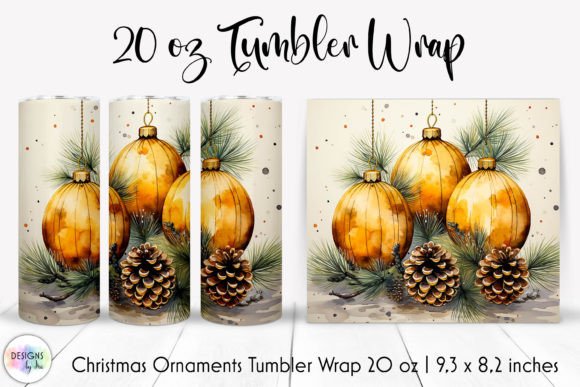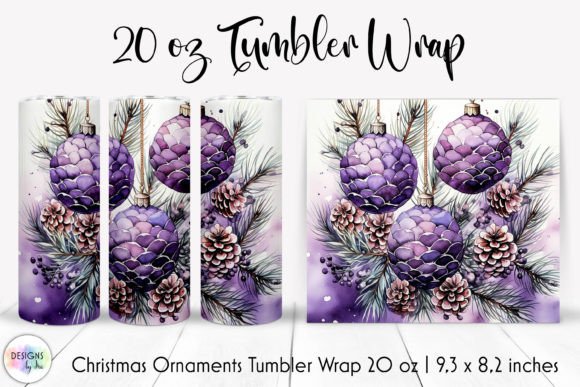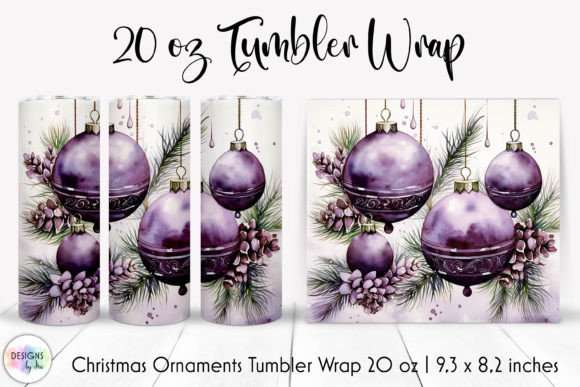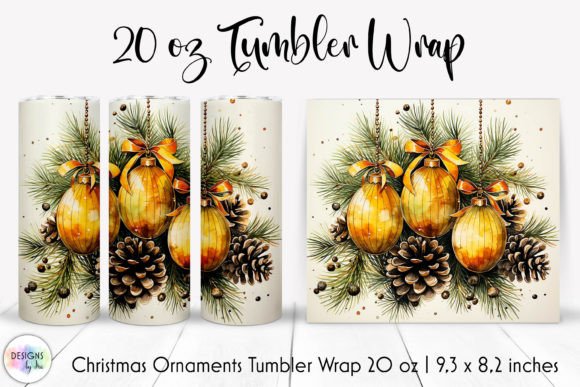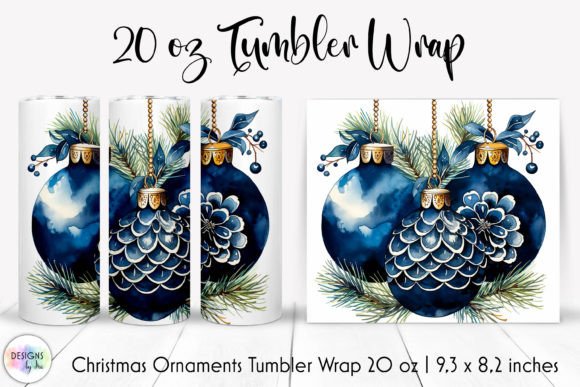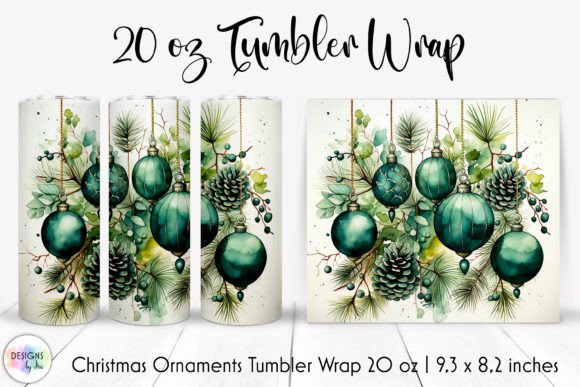
Pine Cones and Bulbs Christmas Tumbler Review
When I first pulled up the Pine Cones and Bulbs Christmas Tumbler graphic, I immediately felt that quiet, frosty morning mood that only a well-composed watercolour arrangement can deliver. It’s not a loud, in-your-face holiday pattern. The ornaments and pine cones sit together in a soft, painterly cluster, almost like a vintage botanical sketch thawed onto a tumbler wrap. My mind didn’t stay on the straight tumbler template for long. I started thinking about how this artwork would translate into a real embroidery project — the kind a small shop owner would stitch onto a natural linen tote bag, a cozy sweatshirt, or a set of handmade kitchen towels for a holiday market.
As an embroidery designer who reviews digital assets constantly, I don’t just look at a PNG file and call it a day. I ask: will this hold up under thread? Will the delicate watercolour shading make sense in satin stitches and fill regions? Will it feel like a professional finished product, not just a printed image? The Pine Cones and Bulbs Christmas Tumbler graphic comes as a 20 oz straight tumbler wrap, 9.3 by 8.2 inches, which is a generous canvas. That size alone gives me options. I can scale it down for a 4x4 or 5x7 hoop, or I can use sections of the arrangement for a multi-hoop project on a larger garment. The watercolour style is the tricky part, but it’s also what makes the design memorable.
First Impression: A Soft, Painterly Winter Mood
The composition feels balanced yet organic. The pine cones have that layered, slightly blurred edge you get with real watercolour washes, and the Christmas bulbs are tucked in gently, not perched like perfect shiny plastic ornaments. The whole arrangement has a nostalgic, hand-painted charm. If I were to digitize this for embroidery, I’d lean into that softness by using blended thread colors — maybe a variegated brown for the pine cones, muted sage and olive greens, and a gentle brick red with a touch of gold for the bulbs. It’s not a design that screams for neon thread. It wants a subdued, natural palette. That’s honestly a relief, because too many holiday designs go overboard with glitter and saturation. This one could live happily on a cream hoodie, a slate-grey apron, or a rustic tea towel.
For a craft business owner, this kind of visual personality is gold. It appeals to a customer who loves Christmas but doesn’t want tacky. The watercolour feel makes it look like a bespoke piece of art, which means you can charge a premium for the finished product. I could see it working beautifully on a canvas tote bag as a limited-edition holiday drop, or on a set of cloth napkins for a slow-living boutique. The mood is calm, wintry, and a little romantic — perfect for gifts that feel curated.
Real-Life Embroidery Potential: How It Holds Up Under Needle and Thread
Let’s get practical. The Pine Cones and Bulbs Christmas Tumbler file is a PNG — not an embroidery file. So if I’m going to use it for machine embroidery, I have to digitize it from scratch or hire a digitizer. That’s a step many crafters forget, and I always recommend testing a sample on scrap fabric before committing to a final product. The watercolour effect, while beautiful, is the biggest challenge. Soft blending in a raster image doesn’t directly translate to flat embroidery. But a skilled digitizer can interpret the light and shadow with careful stitch direction and density changes. Think overlapping fill stitches with open areas to mimic the bleeding of pigment, or using a satin stitch border around certain elements to give definition without losing the softness.
I recently tested a similar watercolour-inspired design on a cotton sweatshirt. The key was choosing the right stabilizer and running a test stitch on a similar fabric weight. For the Pine Cones and Bulbs Christmas Tumbler concept, I’d recommend a medium-weight cutaway stabilizer for knits, and a tear-away for woven items like tea towels. The pine cone details — those little overlapping scales — could become dense problem areas if not handled carefully. I’d urge anyone to check the stitch density in the digital proof before hitting the start button. A few test runs on different fabric textures (like a cotton canvas vs. a soft fleece) will reveal whether the design needs adjusting.
Where This Design Shines
Certain products just feel like a natural fit. The watercolour arrangement makes me think of personalized gifts that feel heirloom-quality. A linen pillow cover with this design in the corner, a set of embroidered cloth napkins wrapped with a ribbon, or a baby blanket with a small, scaled-down version near the hem would all be stunning. The holiday theme is obvious, but it’s not so literal that it can’t be used all winter. I’d also consider it for a custom apparel line: a unisex pullover with the design placed high on the back, or a minimalistic pocket placement on a chambray shirt. For Etsy sellers, this design photographed well on a neutral background could make a printable mockup that stops scrollers in their tracks.
I also appreciate that the arrangement doesn’t have tiny, fragile lettering. That’s a common pitfall in embroidery designs — minuscule text that clogs with thread and becomes unreadable. The pine cones and bulbs are shapes that hold up even when scaled down, as long as you maintain the right proportion. For a cap or a small patch, I’d isolate maybe two pine cones and a single bulb, but the full arrangement would be too large for a curved hat surface. On a flat-back tote bag, though, it would be spectacular.
Points to Watch: Fabric, Hoop Size, and Detail Caution
No design is perfect for every application. The Pine Cones and Bulbs Christmas Tumbler graphic, if converted to an embroidery design, would need careful consideration on dark fabrics. The watercolour’s light washes might disappear against a black hoodie. I’d always test on both light and dark backgrounds to see if you need to adjust thread colors or add a subtle light underlay. On stretchy fabrics like jersey, the design could distort if you don’t use a proper stabilizer, so a test run is non-negotiable. Also, the original size is meant for a tumbler wrap, so it’s wide and short. When bringing it into embroidery software, you’ll need to decide whether to keep the proportions or crop it. A full 9-inch-wide stitch might exceed many home machine hoops, so I’d likely scale it to fit a 5x7 or 6x10 hoop, sacrificing some of the outer edges. That’s okay — the core cluster of pine cones and bulbs is strong enough to stand alone.
If you’re planning to sell finished items or digital embroidery files, always check the license. The PNG file you receive is a graphics asset for tumbler wraps, not an embroidery file, so you’d need to clarify whether you’re allowed to digitize it for commercial embroidery use. Many designers permit this, but some don’t, so don’t skip that step. I’ve seen too many small shops get into trouble by assuming a digital product’s license covers everything. Protect your business by reading the fine print.
Stitching Advice for a Professional Finish
Based on what I see in the watercolour ornament arrangement, here’s how I’d approach the embroidery process step by step:
- Digitize with care. Break the design into manageable color blocks. Use a combination of fill stitches with varying angles to simulate the watercolour flow, and keep satin stitch borders on key elements like the bulbs to give them a slight sheen.
- Choose thread colors that mimic the wash. Instead of solid red, pick a slightly muted cranberry or dried rose. For pine cones, use a mix of two or three browns in the fill to avoid flatness.
- Test on scrap fabric first. Run the design on a piece of cotton twill or linen that matches your intended final product. Check for puckering, thread breaks, and density problems.
- Review stitch density in your software. The pine cone scales can turn into a dense mass if over-stitched. Open up the spacing slightly to let the fabric breathe.
- Use the right stabilizer. For woven fabrics, a tear-away stabilizer often works. For knits or stretchy garments, a cutaway stabilizer is safer. For a tea towel, I’d float a layer of water-soluble topping to keep the stitches from sinking into the pile.
- Check black and white mockups. Convert the design to greyscale in your embroidery software to see how the contrast holds up. If it turns into a muddy mess, adjust the color values until the shapes still read clearly.
- Compare light and dark fabric backgrounds. Stitch a mini version on both a cream and a charcoal fabric swatch. This will tell you immediately if you need to tweak thread choices.
How This Design Elevates Handmade and Commercial Products
There’s a quiet confidence in the Pine Cones and Bulbs Christmas Tumbler design that translates well to handmade product lines. It suggests the maker has an eye for understated beauty, not just a holiday novelty. In a saturated market of Santa hats and reindeer, this stands out. A boutique owner could build an entire winter collection around a single motif like this — matching embroidered aprons, oven mitts, and fabric gift bags. The consistency of the theme across products reinforces brand identity and builds customer trust. People return to shops that feel cohesive and intentional.
For digital embroidery file sellers, offering a version of this design digitized and tested would be a smart move. Buyers are always searching for Christmas designs that aren’t cartoonish. The watercolour style photographs beautifully, which means the listing mockup will look professional and inviting. When I picture it on a natural linen pouch with a cedar sprig tucked next to it, I can already see the “Add to Cart” clicks rolling in. The key is in the presentation — show the design on a real product, not just a flat digital render. A photo of the stitched out sample on a warm oatmeal sweater will sell the design far better than any description.
Final Thoughts from the Embroidery Desk
I didn’t expect a tumbler wrap graphic to inspire this much embroidery brainstorming, but here we are. The Pine Cones and Bulbs Christmas Tumbler design has a genuine, painterly soul that I’d love to see rendered in thread. It’s not a plug-and-play embroidery file, and that’s important to acknowledge. You’ll need digitizing expertise, testing patience, and a license check. But for those willing to put in the work, the payoff is a product that feels like a custom watercolour painting, not a mass-produced tourist trinket. Whether you’re stitching a single tote for a friend or launching a line of winter pillows for your craft shop, this design has the quiet depth to make people pause and smile — and that’s exactly what you want in a machine embroidery design.